Sunday, November 29, 2009

Barefoot Running & Tarahumara Runners

Photo by Marcos Escobar


My ultrarunning friend and CNN reporter Ashley Fantz in Atlanta did a nice piece with Chris McDougall the author of “Born to Run” on the problems that shoes create for our feet. Unlike many of the running stories about barefoot running and Vibram Five Fingers, this piece actually had some images of the Tarahumara tribal ultrarunners in Mexico and their custom made sandals (basically bare budget VFFs) along with their absolutely beautiful and vibrant clothing…and functional I might add.

The Tarahumara run hundreds of miles per week in the rugged canyons of central Mexico’s Copper Canyon—with NO running shoes and none of the common injuries seen in Western countries that use fancy “high tech” running shoes. The Tarahumara run faster, more efficiently, and much safer than we do in this country. The Tarahumara are definitely worth studying when looking at injury prevention!

Oh…and one of the key findings on why they can run so much without injury? They enJOY running. :o)

Enjoy—more foot fitness and less running pain!

http://www.cnn.com/video/#/video/living/2009/10/07/barefoot.runner.mcdougall.cnn (CNN Story)

http://www.caballoblanco.com/ (Coppyer Canyon Ultra Marathon Info & Links to Tarahumara)
Once again...in Foot Fitness, Coach RJ!

Friday, November 27, 2009

Kodachrome-The Last Roll

I took this shot @ Drive Invasion 2008 in Atlanta after The Legendary Shack Shakers left the stage amidst a literal storm of Pabst Blue Ribbon beer and other flying objects. I was back stage on state left shooting towards the crowd. I like this shot because even though it's "digital" it reminds me of the warm glow of Kodachrome 64. I rarely use artificial strobe lights when shooting concerts.
This was taken with available light at ISO 1600, 1/60 second, F/5, on full manual setting.

I just watched a news special about Kodachrome film. There is only ONE lab in the world that still processes this kind of film...yes I said FILM! Not a digital chip but FILM!


I grew up with Kodachrome as my father Ron Sr. recorded our lives through the lens of his old Argus C3 35mm rangefinder camera. Film of choice? Kodachrome 64. Our family has thousands of slides. When I went out on my own, I continued to shoot Kodachrome for family events. I too have thousands of slides.


In December of 2010, the last lab on the planet will stop developing Kodachrome film. The end of an era Comrades. Until the invention of Kodachrome in the 1930s, the only way you could have a "color" image of yourself was to have a painting created. With Kodachrome, the common man could have a color image.


Even though my full-time gig is Corporate Wellness, I'm also a member of the Professional Photographers of America and still do quite a bit of photography especially in the music business....allow me to flashback for a moment...
The good thing about learning to shoot with film is that I still shoot like I'm shooting film. What does this mean? I have a lot sharper eye for composition, subject, light, and subject energy than many of the new photographers. With digital, you can shoot thousands of images in one setting. With film, you had to be a lot more selective, patient, and basically much more skilled at your craft. Film capacity? 36 exposures per roll. At a rock concert back in the day, I'd shoot around 4-6 rolls of film. Today with my digital Nikon, I'll shoot around 250 or so. Slightly more, but I'm still conservative and selective. I think this makes me a better photographer. It's not quantity even though if you shoot enough eventually you'll probably get some great photographs--it's more about QUALITY. It's also easier to go through a few hundred photos than a few thousand when thinking of editing and print selection.


Anyway...just some random thoughts from an old school photographer that grew up with Kodachrome 64. -RJ

Wednesday, November 11, 2009

Using Root Cause Analysis (RCA) for Health & Foot Pain

If you appreciate corporate processes like RCA, Six Sigma, and LEAN, you might enjoy this post by corporate speaker and process trainer Mike Micklewright. Mike had foot problems and decided to use RCA to start asking his doctor the “Whys.” After about three whys, his doctor refused to participate—so he found another doctor that would keep answering the whys until he finally got to the root cause of his foot pain…and once again…it was a lack of foot fitness! All the conventional treatments were not getting to his root cause failure.

His introduction, explores why we don’t use RCA for health issues at home. Since RCA works so well to optimize performance at work, why don’t we use it more at home? Good point Mike!

For full post, see link below.

http://www.qualitydigest.com/inside/quality-insider-column/when-it-comes-health-care-even-whys-guy-forgets-ask-why.html

*By the way, I too have ripped out my own orthotics and fixed MY OWN foot pain by increasing the fitness of my foot which then enhanced the mobility of my ankle. All the podiatrists, orthotics, and cortisone shots never fixed the root cause failure of my foot which was weakness. Want less foot, ankle, knee, and back pain? Improve foot fitness which includes having optimal “mobility” and functional “stability”! --Coach RJ

Mike Micklewright is president of
QualityQuest Inc., a Chicago-based consulting, training, and facilitation company specializing in lean, ISO 9001, ISO/TS 16949, Six Sigma, and their integration. Micklewright is an ASQ-certified Six Sigma Black Belt, quality auditor, quality engineer, and quality manager. He holds a degree in general engineering from the University of Illinois and has worked in design, manufacturing, and quality engineering for the Saturn Corp. of General Motors and SeaquistPerfect Dispensing. Micklewright is a sought-after speaker and has had many articles published.

Friday, October 30, 2009

Learning to Play...Again!

"You can discover more about a person in an hour of play than in a year of conversation." --Plato

One of my most difficult tasks sometimes in corporate wellness working with adults is to teach them how to play again...and to allow myself to play too. How do I play? I like Frisbees, hiking, riding my mountain bike, concerts, and music.


Fitness doesn't always have to be hard. Light to moderate hiking is a lot of fun. Playing Frisbee is fun. The Hula Hoop thing is coming back! Indo Boards are taking off in schools and way beyond. Biking, surfing, etc. Lots of ways to be fit and have fun at the same time. Beyond just fitness is the larger issue of general health. LOTS of things can help you be healthier from music to reading and beyond...and even playing!


Play keeps us young. This is a GREAT example of how a little innovation in Stockholm can create a lot of play, youth, and healthier behaviors. Enjoy! Thanks to my friend and fellow RKC Marla Diener for sending it my way...--Coach RJ


Need more fun? Go to: TheFunTheory.com

Wednesday, October 28, 2009

Shoe Trends-More on Foot Fitness!

I've been getting more and more inquiries about feet lately. It seems like everywhere I turn, there is something going on with feet these days. My continuing education deals more and more with the fitness of the foot...more they never taught me in school I had to learn on the job in the real world!
As the interest in foot fitness grows, so do product options. Let me summarize my "stance" with feet and shoes based on what I "currently" know (and I'm learning more and more by the day).
  • I tend to believe "less is more." I want to think about how the foot moves without any modern technology. Just the old-school foot doing what it is designed to do in its most natural state. How does a bare foot move without shoes? Without a shoe, the foot reacts very differently. It will grip, stabilize, and attempt to claw the ground to stabilize the rest of the body. The foot will get strong doing all this because it's a lot of work! With shoes, the foot has artificial support, and the muscles and tendons tend to get weaker. With running shoes, the more developed the shoe, the less work the foot has to do which means the body works too hard above the foot in ways it does not want to work. Put huge air bags under the foot? The foot is not happy because it really wants "stability" and not soft squishy instability. It's hard to "claw air" or root yourself into the ground if you have soft shoes. Many of our movement problems today can be traced back to our feet--the first things to hit the ground with forward locomotion--our bases of support from which everything else is stacked.
  • A few years ago, Nike and other shoes companies started picking up on the trend to go back to barefoot running. The research is out. With more technology in running shoes, injuries got WORSE--not better...and yes, these shoes cost more too! Enter the Nike Free and some other options. Enter the Vibram Five Fingers (VFFs) I've been talking about lately. Also enter other shoes with very different designs claiming to work more muscles like the MBT, etc.
  • MBT and Toning Shoes: These shoes are gaining in popularity. They claim to make a person work harder in the calves, hamstrings, glutes, etc. I'm sure they do because the shoe is curved in many of them--or somehow less stable due to design which requires one to work much harder to stand upright and move forward; however, the MBT shoe is curved in the opposite direction of the "natural curve" found in the arch of the foot. I go back to less is more and what the foot looks like naked. Less shoe--more foot fitness. Less shoe--more natural biomechanics. Some of the new toning shoes have very thick soles that radically alter how you walk if barefoot. More emphasis is put upon the "heel-to-toe" stride which is the opposite of how you would walk while barefoot. The trend I've been following with "Chi Running," barefoot walking/running, and shoes like the Nike Free or Vibram Five Fingers is more of the mid-foot strike--not the heal-to-toe strike. The support system (arch) is in the middle of the foot--this is where we should be striking--not exclusively on the heel itself. As shoes got better, we put more load on the heel because we had more padding, but this changed our gait and biomechanics away from a "natural" stride and foot strike; hence, more "running" injuries and more foot/ankle problems.
  • I guess we have to go to root cause of movement/gait problems which seems to be pointed more and more at the actual feet. We have lots of problems today with fundamental biomechanics starting with foot/ankle then up to knee, hip, and back. Many of these problems can be traced back to the feet being too weak which then can make the ankles get too stiff as a compensation for lack of foot stability--and the compensations can travel all the way up into the neck and shoulders. Some of the new toning shoes talk a lot about fitness gains "above" the foot, but I have not heard as much about the actual fitness in the foot itself. Go back to root cause. Think FOOT fitness first--then worry about the calves, hamstrings, and glutes later. The feet--they hit the ground first and stabilize everything up the chain of movement. When your feet work well, the rest of your movements up the chain will also be better. If your feet have problems, so will the upper body.

For now, this is my direction with foot fitness and shoes. Using "less" shoe or at least shoes with harder soles seem to be making my feet stronger and happier. If the new toning shoes work for you--great! I had a few people tell me personally that the MBTs helped both diabetic feet and plantar fasciitis foot conditions--I have no reason to doubt them. I'm glad they got relief. Keep thinking about the naked foot though and what can be done WITHOUT any shoes or any technology to make you move better.

Here are a couple of related links if interested in above:

Keep it simple. Keep it cost effective...and keep your feet happy and fit.
In Foot Fitness!
Coach RJ

Wednesday, October 21, 2009

Finding VFFs


A lot of people are wanting the Vibram Five Fingers (VFFs) but having problems finding them--especially retail at a physical location. I asked my friends and clients where they were finding them. I've compiled a list with a few links for everyone. These are places that came with personal recommendations from my clients or fitness friends. I'm sure there are more, but I don't know of them personally.
Models: I use the "KSO" (Keeps Stuff Out) model because they cover more of my feet so debris does not get inside when I'm out on the grass. Other models are more open top. One is designed for winter--more like a wetsuit so they are warmer. Different colors are offered too. You'll have to explore and see what you like.
Break In Period: I'd recommend wearing them a little bit at a time so your feet can get used to the extra demands. Throwing a pair of VFFs on for the day when you are not ready for them is like going into the gym for a 1-2 powerlifting and plyometrics session when you are completely out of shape...NOT GOOD! Your feet are weak if you have not been going barefoot and wearing shoes all the time. It's about "foot fitness." Feet need time to get in shape with sensible progressions just like other areas of the body. VFFs come with some recommendations, but basically listen to your feet. They'll let you know.

On-Line:

Retail (Cental Coast/SoCal):


Don't understand the whole VFF thing? Check out my detailed post on VFFs and Foot Fitness then Rock Your Feet!!!

In Foot Fitness! -Coach RJ

Wednesday, September 30, 2009

My 1000th Day of Exercise in a Row!

I hit 1,000 days in a row last Sunday of straight exercise. 1,000 days. At least 30 minutes per day. NO excuses.

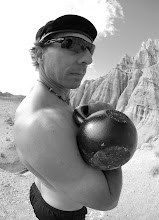
While my workout Sunday was pretty vicious--1,000 kettlebell swings with a 24kg (30X30 format: 50 minutes=1000 reps @ 20 per minute), many of my previous 999 workouts were not very hard...some were even very slow and easy.

I've learned a lot about myself the last 1,000 days of exercising. I didn't think I could do it at times...the rain, jet lag, late night sessions, heat during summer, STRESS, work, family, my own head games and whining, etc., but I pulled it off despite the challenges along the way.

There are a few take home points worth mentioning. I'll probably be the only person you'll know that exercised 1,000 days in a row, so I hope it's worth noting and that it helps, because as a Wellcoach, I truly want everyone to play. :o)

  • Most of the days I did NOT want to exercise. ALL 1,000 days I was glad I did after it was over. This is a powerful statement regarding the chemical response of exercise and movement. Ever wonder why so many Americans are depressed and unhappy today? Maybe it's at least in part related to the fact we don't move enough! NOT ONE DAY did I say, "#@!# I wish I had not done that exercise for 30 minutes!" The power of the mind-body connection ceases to amaze me sometimes. I've talked to other people about this, and they say the same thing. They never regret the exercise once it's over--they are always glad they did it even though they didn't want to do it before they started! The mojo of movement!
  • I focused on "doing something" each day--not how hard, how long, or making it complicated. I never kept an exercise journal or used an organized "program" that I had to follow specifically--I just did something each day as dedicated exercise. Nearly 40% of my 1,000 workouts were probably just walking--SLOW! Sure--I did a lot of kettlebell work the last 1.5 years getting ready for my certification, but what got me in the place where I could even take a shot at the KB certification was my daily 30 minutes of exercise the previous months...walking, riding my bike, some yoga, gym workouts, hiking, running, and whatever else I felt like doing at the time.
  • 30 minutes per day of exercise is not unreasonable. 40+ years ago, all this might have been a mute point. We didn't need to "put activity back into our lifestyles" because daily activity was already there. Times have changed. Now most of us sit--most if not all day. The best thing you can do for your body and joints is to MOVE...daily. It's that simple. We simply have to start moving again if we are to have a chance at getting healthy again as a nation and controlling healthcare costs.

    What I hope people will realize is that 5-6 days of exercise per week for the rest of your life is pretty good deal--I can't really think of any significant negative side effects...pretty amazing when you compare that to medications, surgeries, and diseases. It's been an interesting journey the last 1,000 days. The stress relief alone was worth doing it--additionally I maintained my weight and stayed pretty fit in the process. At age 49, I can still run around and play with my children and do what I want to do. I'm still in the game not on the sidelines!

    If you don't exercise--start. If you exercise--don't quit! It's worth the effort to stay active and be an ACTIVE participant in your own healthcare.

So how did I get it all started? The Lean Berets 30X30 Challenge! Check it and report for duty yourself!

In health-ALWAYS!
Coach RJ